Case Study
Stretch Film
A Fully Circular Recycling Solution for Plastic Stretch Film in the Wine Industry
In the heart of California wine country, sustainability has always been part of the conversation. One essential material, however, lacked a viable end-of-life solution for years. Stretch film, critical for protecting valuable wine shipments, had no scalable recovery pathway. Until now.

Overview
Stretch Film’s Role in Winery Operations
Stretch film plays a critical role in winery operations. It stabilizes loads, prevents breakage, and protects thousands of dollars in product using a minimal amount of material. Lightweight, cost-effective, and efficient, it remains the most practical option for pallet stability in the wine industry. The challenge, however, lies in the lack of infrastructure capable of recovering and recycling it.
A Regional Recycling Gap
In California’s Napa and Sonoma wine country, individual wineries did not generate enough volume of used stretch film to justify private collection, and municipal recycling systems were not designed to handle thin films. As a result, stretch film with significant reuse potential was routinely sent to landfill.
A Collective Response
Recognizing that this was a shared challenge rather than an isolated one, a grassroots group of like-minded industry professionals formed following a breakout session at RISE Napa, eventually becoming what is now the North Bay Zero Waste Collective (NBZWC).
St. Supéry Estate Vineyards & Winery, a Napa Green Certified winery, joined with other regional leaders through this effort. Together with iSustain and Sigma Stretch Film, the group set out to build a recycling system designed specifically for stretch film circularity.
Closing the Loop
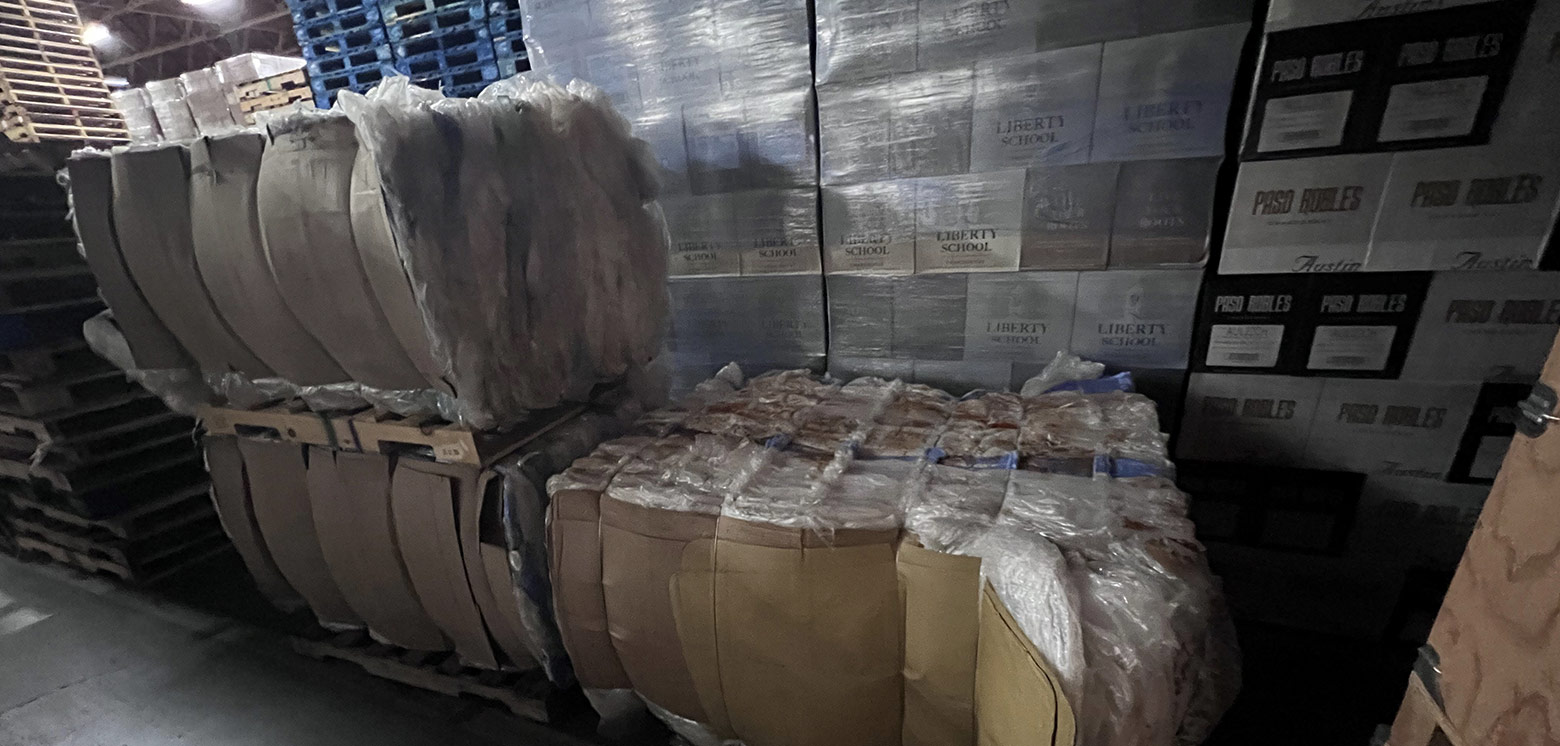
Today, stretch film generated across more than 100 wineries and businesses is now collected, recycled, and remanufactured into new film using Sigma’s circular solution, Sustain360. This closed-loop model is one of the first of its kind in the wine industry, transforming a previously landfilled material into a continuously reusable resource.
Domestic Manufacturing Enables Circularity
A key factor in making this system work is domestic manufacturing. Because Sigma Stretch Film produces Sustain360 in North America, recovered material can realistically be returned to the same producer. A closed loop is not achievable with offshore manufacturing. By collecting, processing, and remanufacturing the film within North America, the program delivers environmental benefits that are both practical and measurable.
Joe Graves, President of Sigma Stretch Film, explained:
“Sustain360 was developed to support circularity while still delivering the performance required for efficient pallet stability. By collecting and reprocessing film here in the United States, the circular loop remains both logical and achievable.”
A Scalable Circular Model
From iSustain’s perspective, the collaboration demonstrates how regional partnerships can unlock circular solutions that extend beyond a single facility or industry. Mark Huber, President of Business Development at iSustain, elaborated on its impact:
“This project proves circularity isn’t a buzzword. It’s an operating system. When the right partners align, waste becomes feedstock and sustainability becomes scalable.”
Why It Matters
Stretch film is truly remarkable in its ability to protect thousands of dollars worth of product with only pennies worth of plastic. However, most MRFs were not originally designed to accept thin films in mixed recycling streams, not because stretch film lacks value, but because thin films are difficult to segregate and process on equipment optimized for rigid plastics. As packaging efficiency has outpaced recycling infrastructure, stretch film now represents a clear opportunity for system modernization rather than material substitution.
The North Bay Zero Waste Collective demonstrates that with the right infrastructure, stretch film can remain the preferred material for pallet stability while participating in a fully circular recycling model. Rather than replacing an effective material with heavier or more resource-intensive alternatives, this approach improves what already works.
The Challenge: Valuable Material Without a Recovery Path
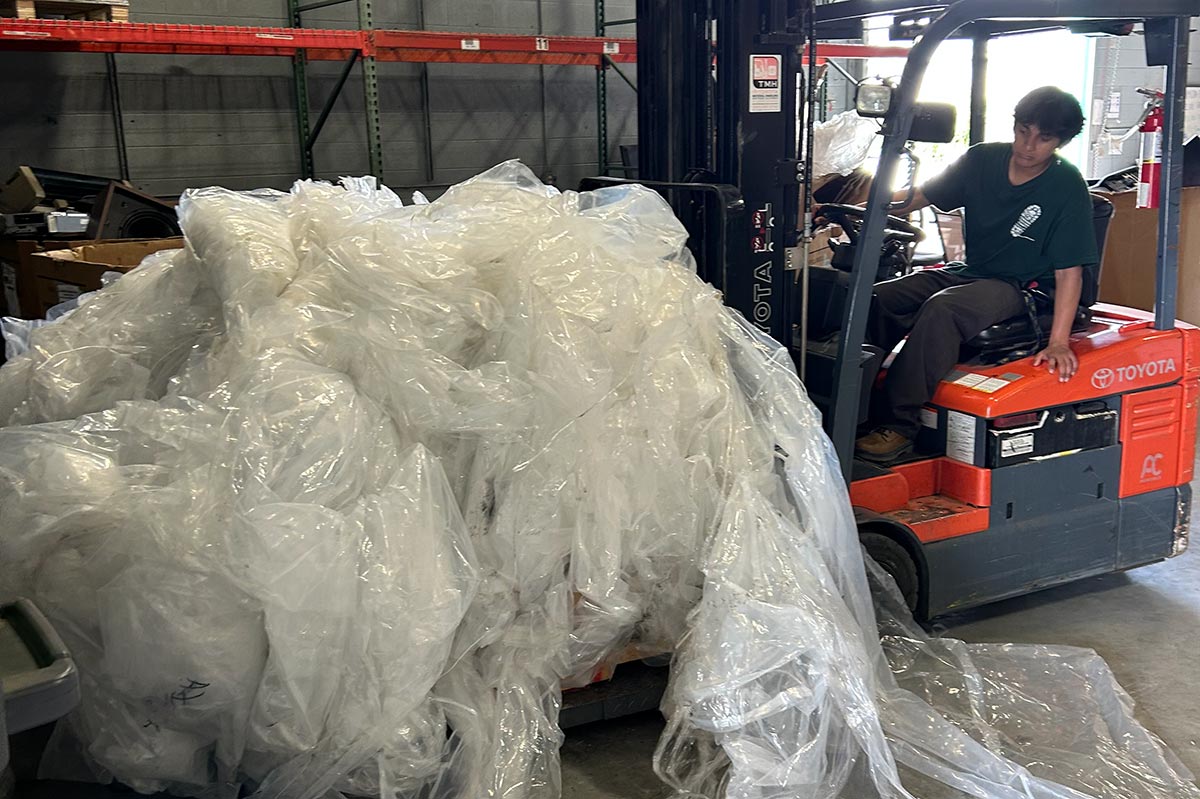
For years, all wineries faced a frustrating reality. Stretch film could not be accepted through outdated municipal recycling programs, and individual waste volumes were not large enough to justify paid pickups. As a result, material with clear reuse potential was routinely sent to landfill.
Brooke Shenk, Winemaker at St. Supéry and Co-Chair of the North Bay Zero Waste Collective, explained:
“When I called my local waste hauler, they told me I had too much stretch film for the blue bin and not enough to justify the cost of a 20-yard dumpster dedicated to stretch film. Many wineries had similar stories.”
These shared challenges prompted wineries to begin collaborating at RISE Napa, laying the groundwork for what would become the North Bay Zero Waste Collective.
The Solution: A Circular Partnership in Action
The turning point came when St. Supéry connected with iSustain and Sigma Stretch Film. Together, the group identified a way to recover used stretch film, convert it into post-consumer recycled resin, and remanufacture it into new rolls of Sustain360 stretch film, effectively closing the loop.
How the Circular Process Works
Collection
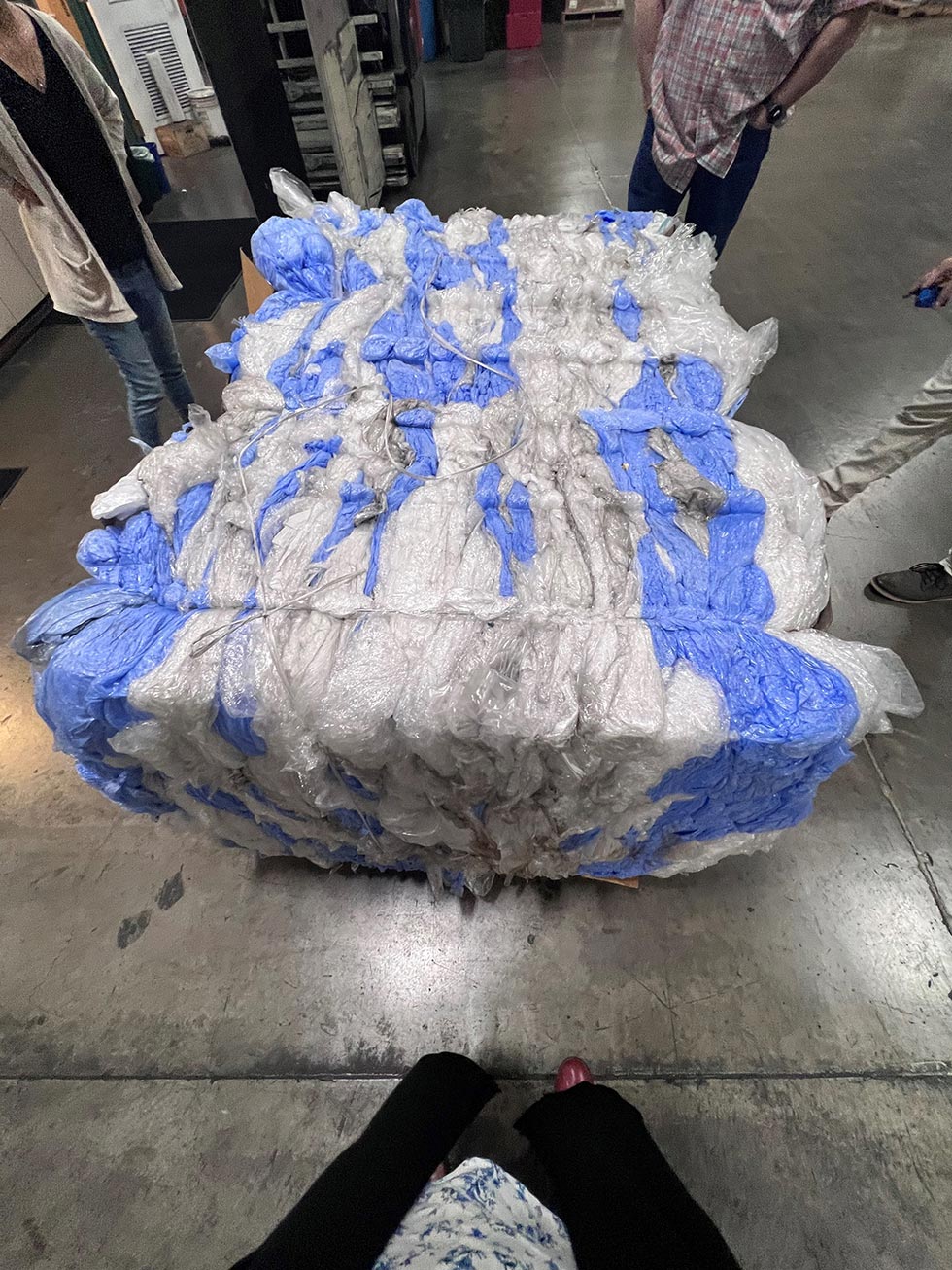
Conservation Corps North Bay provides free pickup of stretch film from participating wineries and businesses, or materials can be dropped off at Wine Service Co-op locations in St. Helena and Napa. Both Wine Service Co-op and Conservation Corps North Bay aggregate, bale, and store the material until full truckloads are reached.
Aggregation and Baling
Wine Service Co-op aggregates, bales, and stores the material until full truckloads are reached.
Processing and Conversion
iSustain manages end-to-end logistics and material flow, partnering long-term with Polyfit to convert post-consumer stretch film into high-performance recycled pellets suitable for machine stretch film applications. This is one of the most technically demanding recycling pathways, requiring intensive sorting, tight specification control, and rigorous mechanical processing to meet the performance standards of machine-grade film.
Polyfit provides consistent, high-quality processed feedstock, supported by strict specification control, full traceability, and comprehensive compliance reporting. These controls enable recycled resin to be confidently reintroduced into high-performance packaging. Through this partnership, post-consumer film collected by iSustain is processed by Polyfit and returned to market through Sigma Stretch Film’s Sustain360 product, closing the loop and keeping the entire circular system within North America.
Manufacturing
Sigma Stretch Film incorporates the recycled resin into new Sustain360 film, completing the loop.
Megan Hernandez, Co-Chair of the North Bay Zero Waste Collective, shared:
“The idea that we aren’t just recycling, but actually creating something circular, is incredible. Most people can’t believe it’s possible. They think there must be a catch.”
Joe Graves added:
“Seeing recycled resin return as new stretch film and reenter the same regional supply chain shows what is possible when recovery systems are designed intentionally.”
Why Stretch Film Remains the Most Sustainable Choice
Stretch film remains one of the most efficient and sustainable options for pallet stability. This initiative highlights why improving its end-of-life pathway delivers far greater impact than switching to heavier or more resource-intensive materials.
Modern stretch film offers:
- Significantly less material per pallet compared to corrugate stabilization, shrink bundling, or reusable strapping
- Strong load containment per pound of material, reducing damaged goods and product loss in transit
- Lower manufacturing energy requirements than heat-intensive shrink systems
- A smaller carbon footprint due to reduced resin usage, lighter freight weight, and efficient recovery
- Lower total system cost compared to alternative packaging approaches
- High-volume domestic recoverability that supports a true closed-loop system
By capturing used stretch film and returning it to production as Sustain360, the North Bay Zero Waste Collective shows how existing materials can evolve into long-term sustainability solutions.
Measurable Impact
The program has already delivered tangible results across both individual wineries and the broader region.
St. Supéry Estate Vineyards & Winery
- Reduced overall stretch film usage due to improved efficiency
- Diverted 5,200 pounds of stretch film from landfill within the first year, saving money on waste hauling costs
North Bay Zero Waste Collective
- More than 100 participating wineries and businesses
- Projected 20 to 30 truckloads of stretch film collected annually across Napa and Sonoma counties
- Approximately 40,000 pounds of film diverted per full truckload
Brooke Shenk noted:
“When I talk about this program, especially to younger audiences or sustainability-minded groups, the excitement is overwhelming. People are amazed that true circularity is happening right here in the wine industry.”
The Results: Circularity Realized
Through this partnership, iSustain, Sigma Stretch Film, and the North Bay Zero Waste Collective have created a working example of a fully circular plastics economy.
Stretch film collected from wineries is remade into new stretch film containing 30 percent post-consumer recycled content. Improved efficiency allows many users to reduce film usage per pallet. The model now extends beyond wineries to other regional businesses.
From iSustain’s standpoint, the success of this initiative reinforces the importance of collaboration across the entire supply chain. Huber shared,
“Circularity does not happen in isolation. It requires producers, recyclers, and end users working together. What is happening in Napa proves the loop can close and remain viable.”
A Model for the Future
What began as a grassroots effort among wineries has become a replicable regional system. By combining local collaboration with the expertise of iSustain and Sigma Stretch Film, the North Bay Zero Waste Collective has created a blueprint for circular recycling that can extend well beyond the wine industry.
How iSustain Can Help You
iSustain develops customized recycling and circular economy solutions for manufacturers, distributors, and organizations nationwide. From stretch film recovery to complex materials management, iSustain helps businesses reduce landfill dependency and build measurable sustainability program
Contact iSustain to explore how your organization can achieve circularity in action.