News
How Wine Country Built a Closed-Loop Stretch Film System Others Are Now Replicating
A year ago, the idea of turning used stretch film from Napa and Sonoma wineries back into new stretch film for those same wineries sounded ambitious. Today, it is a functioning closed-loop system serving more than 100 wineries and businesses and attracting interest from wine regions across California looking to replicate the model.
When iSustain shared the North Bay Zero Waste Collective case study earlier this year, the program had already proven that a closed-loop system for stretch film could work. Designed and implemented by iSustain in partnership with Sigma Stretch Film, Conservation Corps North Bay, and the North Bay Zero Waste Collective, the initiative has since evolved from a local solution into a model attracting interest from wineries, industry media, and other regions looking to replicate a proven approach to circularity.
A True Circular Economy, Not Just Recycling
Most recycling downcycles, turning a material into something of lower value. This program does the opposite. Used stretch film collected from participating wineries is processed into post-consumer recycled resin and remanufactured into Sigma's Sustain360 film, which carries 30 percent recycled content and returns to the same wineries that generated the original material. Film becomes film, and it stays inside the same regional supply chain. The program demonstrates that post-consumer recycled content can be successfully recovered and returned to the very businesses that generated it, creating a true circular economy rather than a one-way recycling stream.
"The idea that we aren't just recycling, but actually creating something circular, is incredible," said North Bay Zero Waste Collective Co-Chair Megan Hernandez. "Most people can't believe it's possible."
The Business Case Wineries Can Use
For member wineries, the closed loop has become more than an environmental win. St. Supéry has weaved the stretch film initiative into select distributor presentations and on-site trade tours. The response has been measurable, noted St. Supéry Winemaker Brooke Shenk. The closed-loop story has set St. Supéry apart for those trade buyers making purchases around corporate sustainability initiatives and resonating with consumer values and how they are making everyday purchasing decisions.
The recycled film performs, too. After switching from a 63-gauge film to Sigma’s 61-gauge Sustain360, St. Supéry uses less material per pallet, dropping from 4.8 ounces to 4.0 ounces. This adds up to roughly 140 fewer pounds of film used per year in addition to being recycled material.
A Model Other Regions Want to Replicate
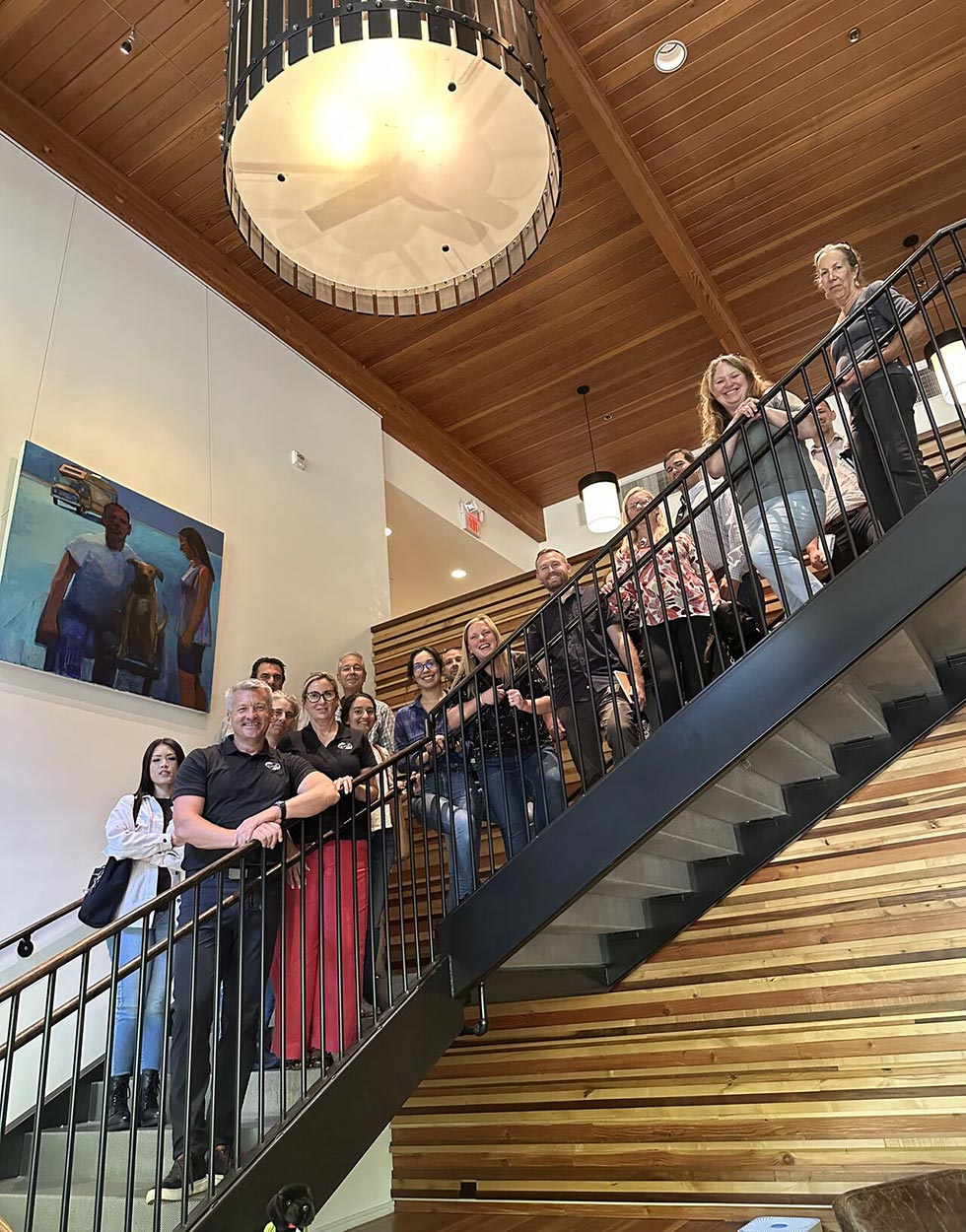
The program's pull came into focus when iSustain and Sigma Stretch Film traveled to Napa to meet the Collective in person. iSustain's Mark Huber and Sigma's Jeff Martinez presented to the group, walking through how recovered film returns as Sustain360 and why buying recycled-content film is what keeps the loop closed.
The audience reached well beyond the two valleys. Two attendees drove five hours from Paso Robles specifically to study the program, with plans to set up something similar in their own region.
"It's a good pilot project that has applicability everywhere," Hernandez said. "No one has to go out and reinvent this wheel. They just need to reshape it for their road."
The Infrastructure Behind the Scale
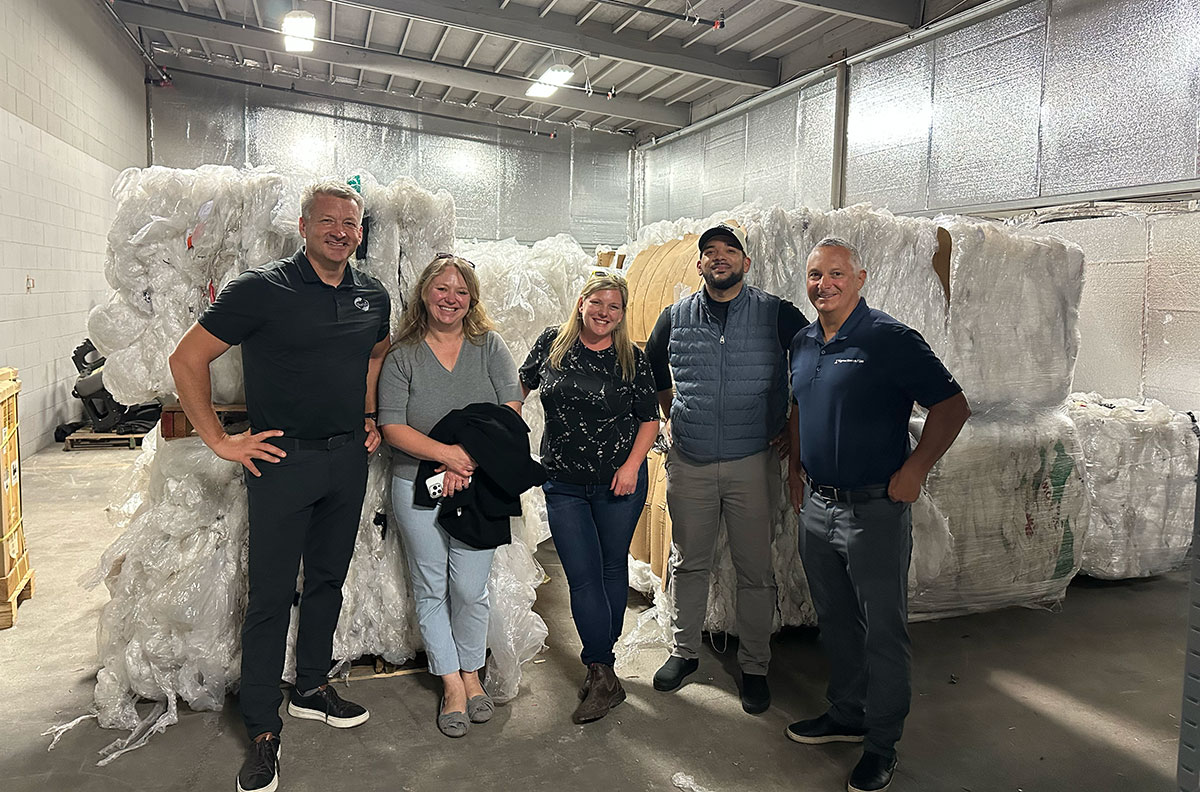
Reaching that point took the right equipment in the right place. For most of the program's life, baling was spread across the network, handled at Wine Service Co-op and St. Supéry while Conservation Corps North Bay (CCNB) worked a small hand baler and hauled material between sites. With CalRecycle grant funding, CCNB purchased an industrial baler, an approximately $20,000 investment, and installed it at its Santa Rosa warehouse along the Highway 101 corridor.
The new equipment consolidated collection, baling, and storage under one roof and gave the program room to grow. CCNB now runs collection for 37 wineries across Sonoma and Napa, plus pickups timed to bottling runs, while the broader Collective counts more than 100 participating wineries and businesses. The first full truckload baled on the new equipment, roughly 35,000 pounds, is nearly ready to ship.
"Having this equipment in-house has exponentially increased the amount of material we can collect and process," said Brandon Benton of Conservation Corps North Bay. "It also represents a marketable skill and training opportunity for corpsmembers."
Closing the Demand Loop
The program’s success depends not only on collecting material but also on creating demand for the recycled product. Participating wineries can purchase Sigma’s Sustain360 film, ensuring the recovered material returns to the marketplace and creating the economic engine that keeps the system operating.
A Blueprint Beyond the Vineyard
What started as a handful of wineries solving a shared problem has become a model other regions can follow, with a wine-industry publication feature in development this summer to give them a concrete playbook.
"This project proves circularity isn't a buzzword. It's an operating system," said Mark Huber, President of Business Development at iSustain. "When the right partners align, waste becomes feedstock and sustainability becomes scalable."